Policy Briefs

Why Are Teachers Uncomfortable Teaching Civics?

Why Are Teachers Uncomfortable Teaching Civics? offers an urgent diagnosis of the discomfort and disorientation many civics teachers report when asked to teach the very subject they were hired to deliver. The policy brief's central finding: K–12 civics teachers across the country feel underprepared, unsupported, and increasingly afraid to teach vital material.
Play Video

Unprecedented National Coverage

A headline from The Atlanta Journal-Constitution reads: "Teaching civics matters as teachers self-censor, but political violence shows we need them." Below is the byline, "By O'Connor Institute Vice President Liam Julian.
RealClear Politics logo above the headline "Our Civics Teachers Are Afraid To Teach Civics" by O'Connor Institute Vice President Liam Julian highlights challenges in teaching civics on a gray background.
A grey background with the Education Week logo at the top. Below, text reads: "Why Some Civics Educators Are Afraid to Teach Their Subject—exploring the challenges of teaching civics today. By Sarah Schwartz.
A headline from The Dallas Morning News reads, "Civics teachers are afraid to teach civics," highlighting challenges in teaching civics, with a byline for O’Connor Institute Vice President Liam Julian on a gray background.
A headline from the Chicago Sun-Times reads: "Teachers can't hold back on civic lessons" by O'Connor Institute Vice President Liam Julian, highlighting the importance of teaching civics, on a gray background.
The Seattle Times logo appears above the headline: "Civics education would make for better citizens. Why don’t we have it?" By O'Connor Institute Vice President Liam Julian, highlighting the importance of teaching civics, on a gray background.

Key Findings

    • Civics teachers are insufficiently trained in both what to teach and how to teach it.
    • Fear of controversy shapes what gets taught. Civics teachers are hesitant to teach complex material; they don't feel they will be supported.
    • Teachers lack clear instructional guidance from districts and states.
    • Civic education lacks a common purpose. Lacking shared preparation, support, or purpose, teachers bring diverging civic philosophies to the classroom.

Empty classroom with multiple wooden desks and chairs arranged in rows, a large green chalkboard at the front—ideal for teaching civics—lockers on the left wall, and sunlight streaming through windows on the right.

Has Your School District Provided Guidance About What You Are And Are Not Allowed To Teach In Civics?
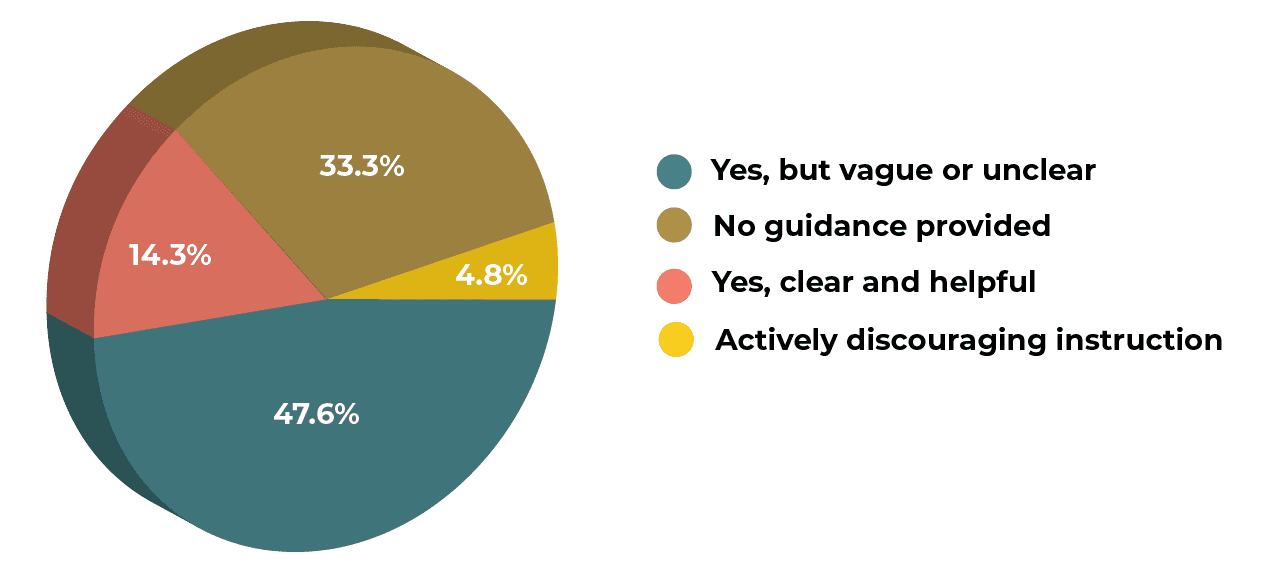
A pie chart showing responses about teaching civics: 47.6% Yes, but vague or unclear; 33.3% No guidance provided; 14.3% Yes, clear and helpful; 4.8% Actively discouraging instruction.

In Your Experience, What Are The Primary Challenges To Teaching Civics Today?
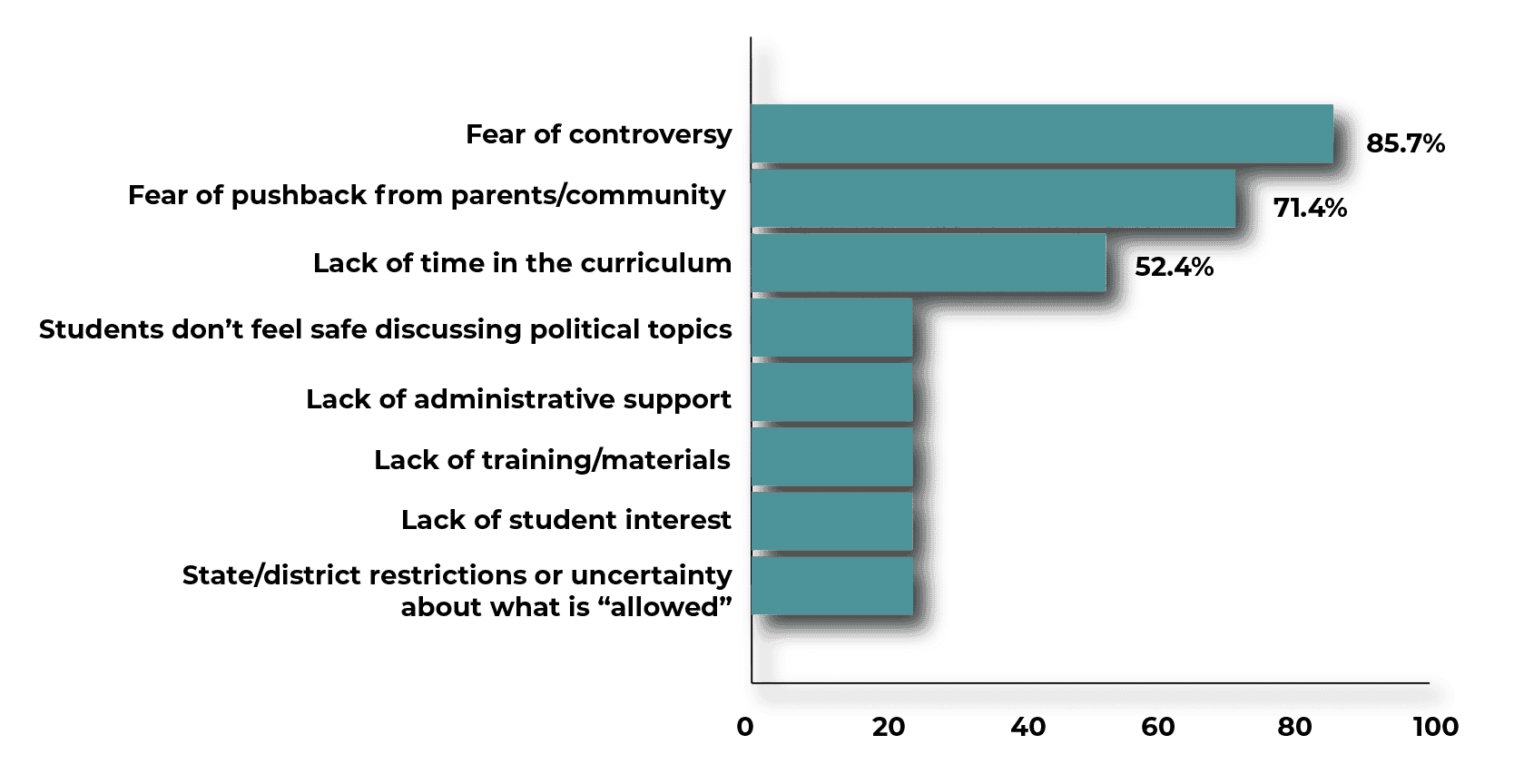
Horizontal bar chart showing reasons educators avoid political topics while teaching civics: 85.7% fear controversy, 71.4% fear pushback, 52.4% lack time; others cite lack of safety, admin support, training, student interest, and restrictions.
Liam-Julian_Headshot

Liam Julian | Chief of Programs & Public Policy

Liam Julian is Chief of Programs & Public Policy at the Sandra Day O’Connor Institute for American Democracy. He was previously managing editor of Policy Review magazine in Washington, D.C., and a research fellow at Stanford University’s Hoover Institution. His writing and commentary on public policy have appeared in publications such as The Washington PostThe AtlanticNational Review, and RealClearPolitics, and on NPR programs including Morning Edition and All Things Considered. He also directed development of Advanced Placement curricula at the College Board, including leading the redesign of the AP U.S. Government and Politics course.

For more information about this policy brief, contact him at ljulian@oconnorinstitute.org