

The Sandra Day O’Connor Institute has expanded its national presence with a new satellite office in Washington, D.C., and the launch of the O’Connor Institute–ASU Law Fellowship Program. Together, these initiatives strengthen the Institute’s mission to advance civic education, consensus building, and civic engagement across the country.
About the O'Connor Institute–ASU Spring Law Fellow
Introducing Anna Barlin
Anna Barlin, the O'Connor Institute's Spring 2026 Law Fellow, is based in Washington, D.C., where she contributes to the Institute's work in civics education, civil discourse, and public policy engagement.
A third-year student at the Sandra Day O'Connor College of Law, Anna holds dual Bachelor of Arts degrees in International Relations and Sociology from the University of California, Davis. Her legal experience spans civil rights, family, immigration, and real estate law. Following graduation, she will join the Phoenix office of Perkins Coie.

Engaging Civic Institutions in Washington
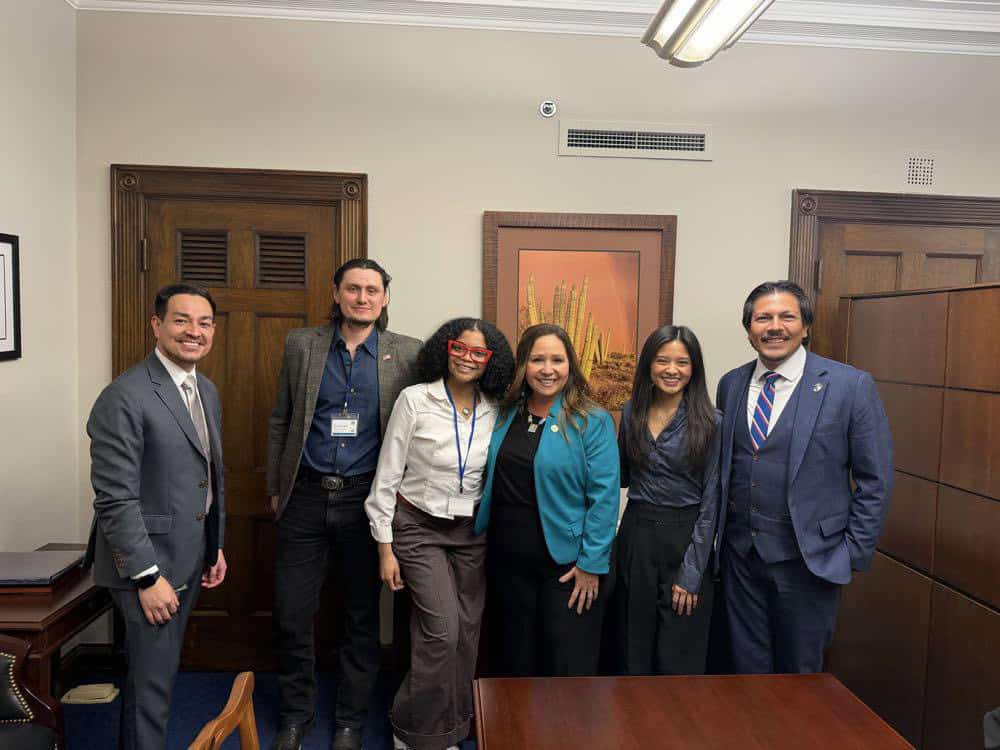
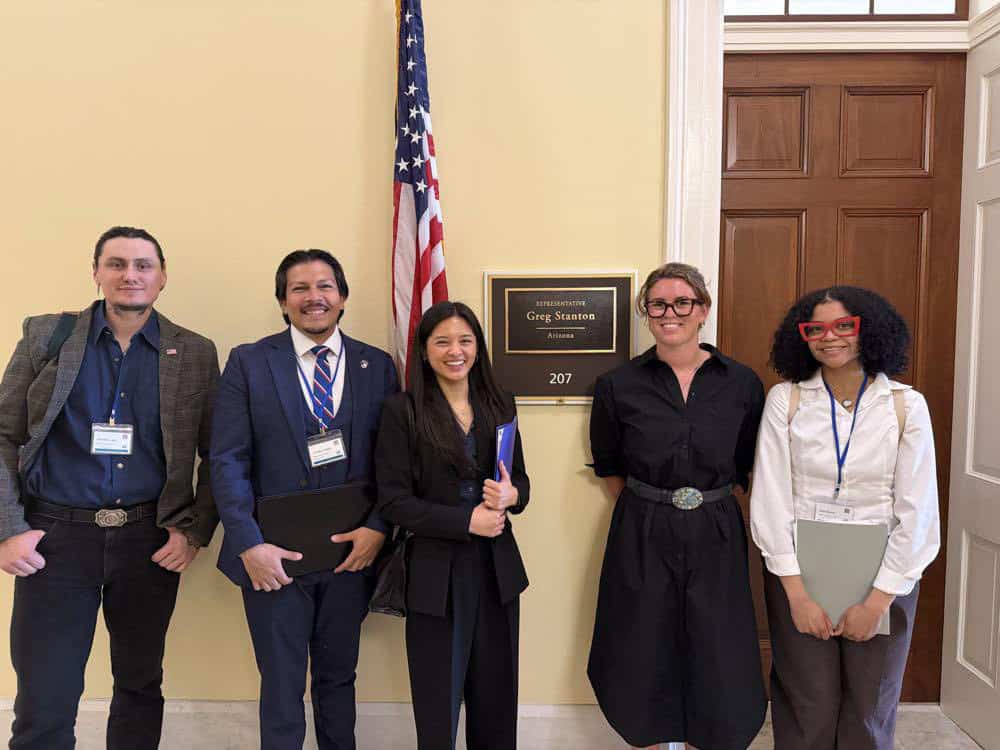
During her time in Washington, Anna participated in the Today's Students Coalition D.C. Student Summit, which brought together students from across the country to engage directly with the federal policymaking process.
The experience underscored the discipline that effective civic participation requires. Students worked to clarify their thinking, structure their ideas, and communicate them in a way that could be meaningfully received by congressional offices.
"You quickly realize that a compelling personal story isn't sufficient on its own," Anna said. "The challenge is making it clear and precise enough to be useful in a policy conversation. That's something you have to learn through practice."
Anna Joins the Ambassadors Civics & Debate Club
The Institute's high school Ambassadors Civics & Debate Club brings together students from across the country for discussions on constitutional questions and civic life. The program provides an opportunity for civil discourse about law, history, and shared democratic principles.
On March 24, Anna joined a meeting on the Eighth Amendment, where students examined the meaning of "cruel and unusual punishment" and considered how courts have applied that standard in practice.

"It was incredibly rewarding to see students engage so thoughtfully with these questions. Many of the issues they raised closely mirrored cases the Supreme Court has already grappled with, and I was able to help make those connections for the Ambassadors and place their responses and thoughts in actual legal reasoning," Anna said.
The discussion reflected the Institute’s approach: giving students the space to test their instincts against constitutional text and case law, and to see how those questions are worked through in practice.
Civil Discourse in Legal Education

Anna's time in law school has also shaped her thinking about the difficulty and importance of maintaining open dialogue in environments defined by strong convictions.
"What I've noticed is how quickly conviction can push out curiosity," Anna said. "In charged conversations, the instinct to defend a position often arrives before the instinct to understand another one. That's a natural tendency, but it's also something legal training is meant to work against. The best classrooms I've been in treat genuine engagement with competing arguments as an obligation."
Indeed, good law professors do not treat engagement with competing arguments as a courtesy; they treat it as a professional expectation. The discipline of engaging with an argument you disagree with, understanding it on its own terms, and responding to it carefully is not incidental to legal training. It is part of what the training is meant to develop, and part of what meaningful civic participation requires.