
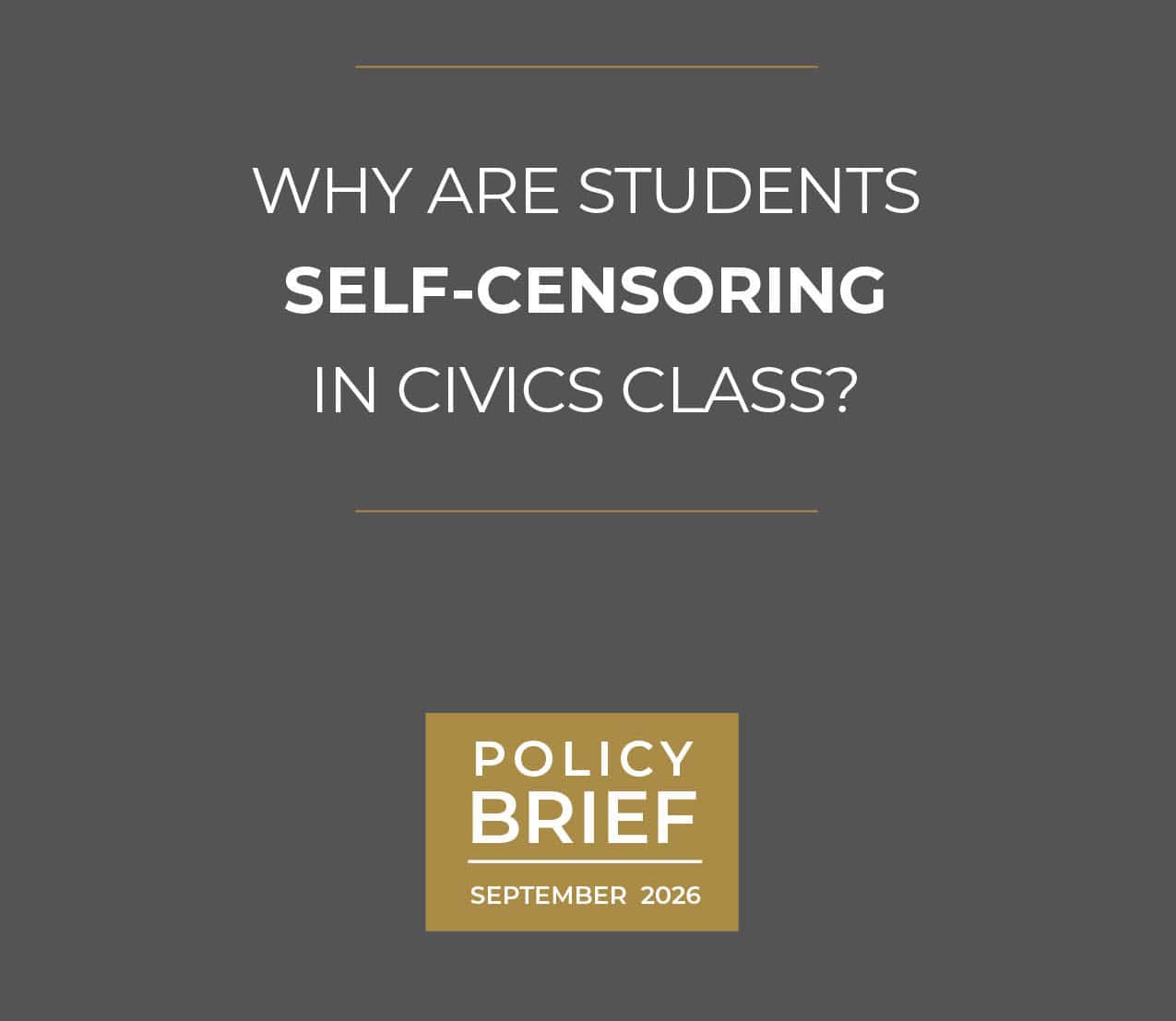
Why Are Students Self-Censoring in Civics Class?
Civic education is not only about what students know. It is also about whether they can form a view, explain it, hear a competing argument and respond.
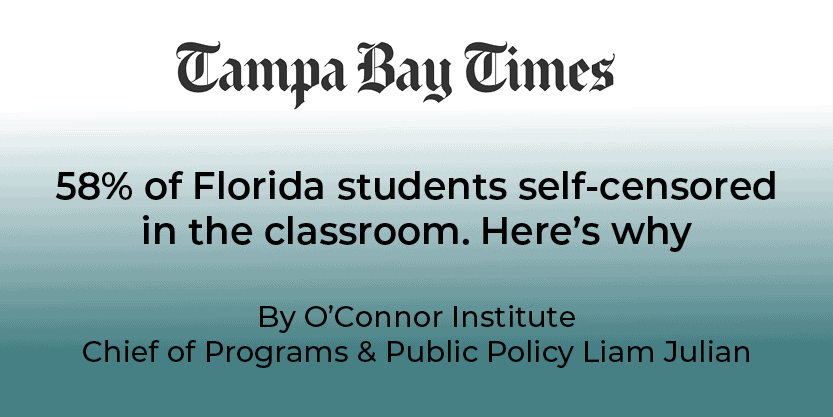
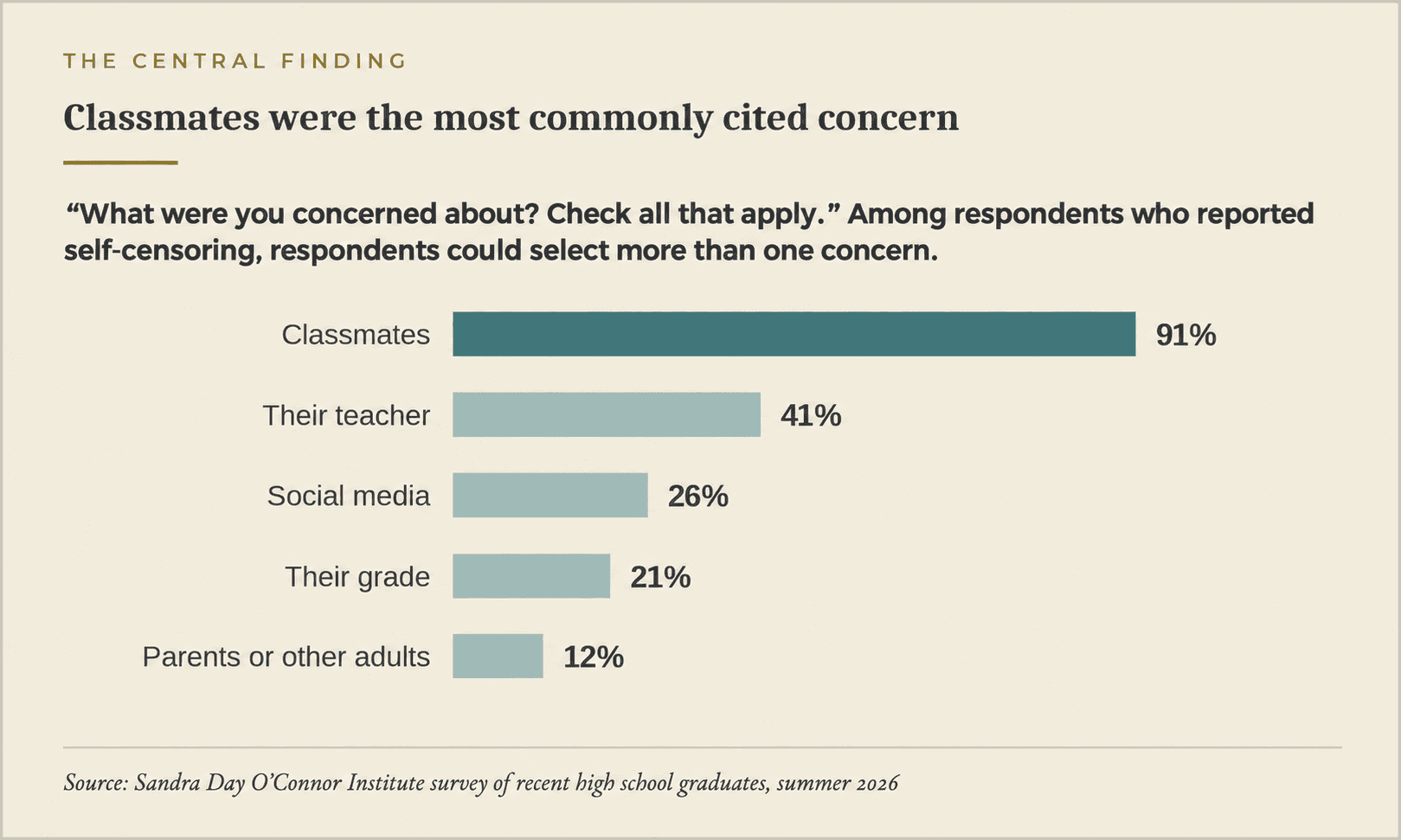
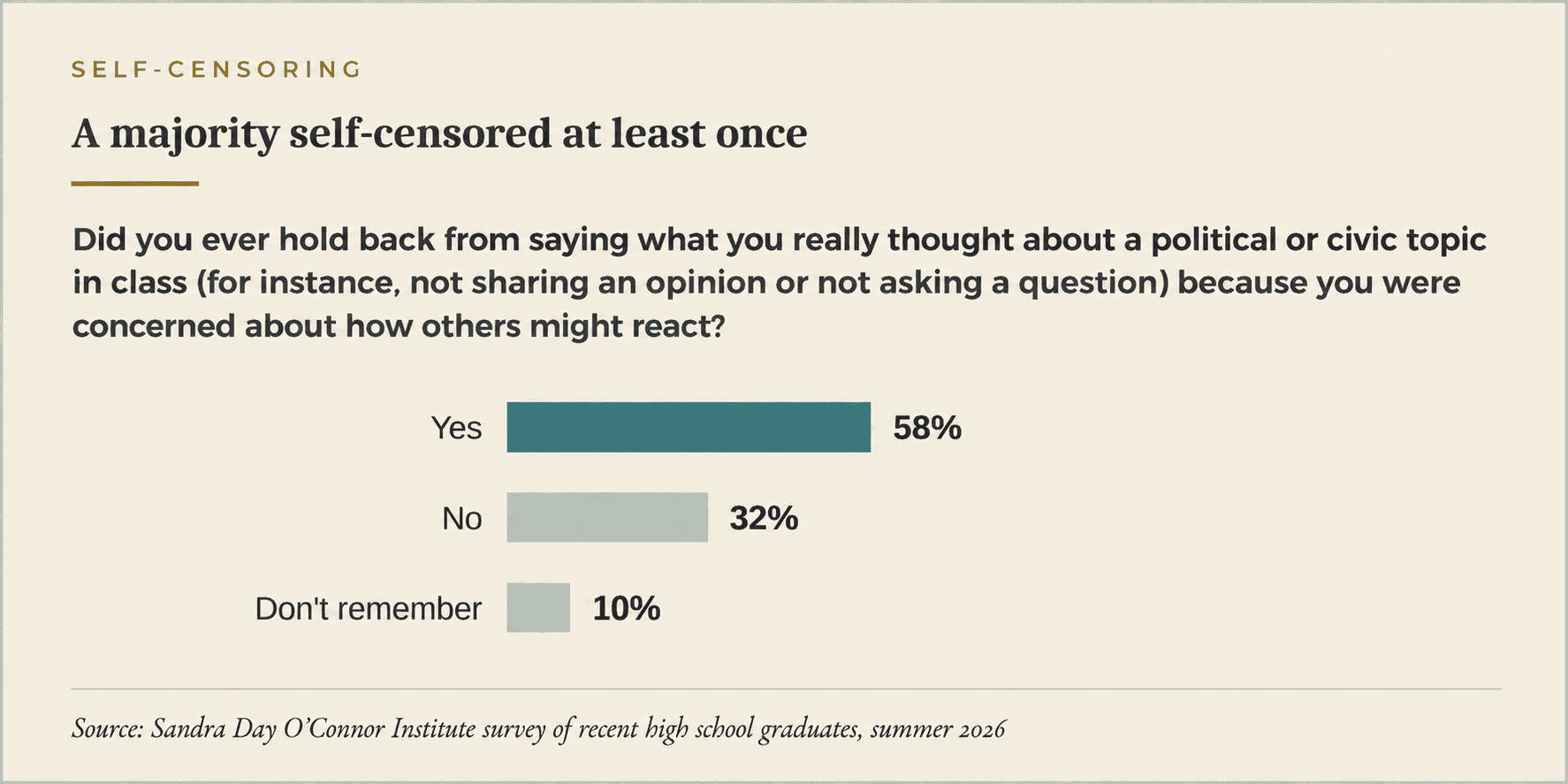
A new Sandra Day O'Connor Institute survey of recent high school graduates suggests that many students are not getting much practice. Fifty-eight percent said they had held back from sharing a political or civic opinion in class because they were concerned about how others might react. Among those students, 91 percent cited classmates as a concern — by far the most common answer, and more than twice the 41 percent who cited the teacher.
Why Are Students Self-Censoring in Civics Class? examines why students go quiet and what schools can do to make productive disagreement easier to practice.
In the News
The Albuquerque Journal
The Anchorage Daily News
The Arizona Daily Star
The Baltimore Sun
The Clarion Ledger
The Dallas Morning News
The Delaware Online
The Des Moines Register
The Forum of Fargo-Moorhead
The Hartford Courant
The Hill
The Honolulu Star Advertiser
The Kansas City Star
KJZZ
The Milwaukee Journal Sentinel
The Oklahoman
The Post and Courier
RealClear Politics
The Richmond Times-Dispatch
The Seattle Times
The Tampa Bay Times
The Tennessean
Hear From The Students - Watch This Brief Video
Key Research Findings
-
- Classmates are students' most commonly cited concern.
Fifty-eight percent said they had self-censored — withheld sharing a political or civic opinion — because they were concerned about how others might react. Among those students, 91 percent cited classmates, more than twice the 41 percent who cited the teacher. - A classroom that feels open can still produce silence.
Seventy-three percent described themselves as generally comfortable sharing their honest views. But among those students, 51 percent had still self-censored at least once. - Teachers shape the conditions in which disagreement happens.
Fifty-three percent of respondents had sometimes or often seen a teacher avoid, cut short, or shut down a political or current-events discussion. Students who self-censored were also markedly less likely to describe their classroom as a safe place to disagree. - Students are not asking schools to avoid difficult subjects. They are asking for better ways to discuss them. Respondents wanted more discussion, more debate, and more hands-on civic experience.
- Classmates are students' most commonly cited concern.
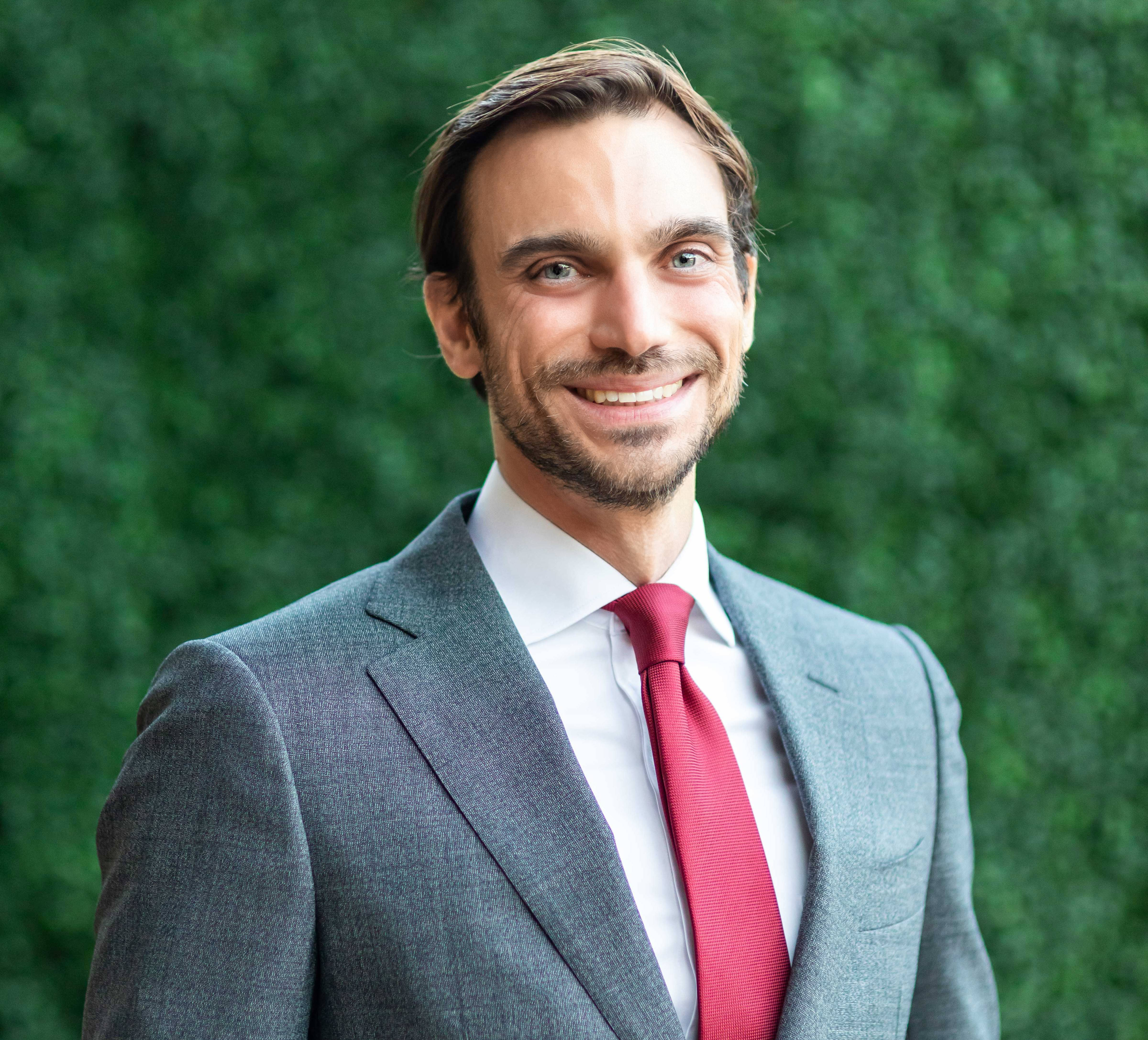
Liam Julian | Chief of Programs & Public Policy
Liam Julian is Chief of Programs & Public Policy at the Sandra Day O'Connor Institute. He previously served as managing editor of Policy Review and as a research fellow at Stanford University's Hoover Institution. His writing and commentary have appeared in The Washington Post, The Atlantic, National Review, RealClearPolitics, and on NPR's Morning Edition and All Things Considered. He also led the redesign of the AP U.S. Government and Politics course at the College Board.
For more information about this policy brief, contact him at ljulian@oconnorinstitute.org