Celebrating the Teachers Who Bring America’s Story to Life
The Sandra Day O’Connor Institute is honored to recognize the educators who carry one of our country’s most essential missions: teaching students about their history, their rights, and how their government works. As a nonprofit committed to strengthening civics education and civil discourse across the United States, we know firsthand that civics teachers and social studies educators are the quiet architects of an informed, engaged citizenry. This Teacher Appreciation Week 2026, we are proud to celebrate their extraordinary dedication—and to commit ourselves to supporting their important work.
There is a moment that happens in classrooms across America — a moment that is easy to overlook but impossible to overstate. A teacher stands at the front of the room, holds up the Constitution, and asks: “Why does this matter to you?” In that instant, something remarkable occurs. Students who came in thinking civics was just another class begin to lean forward. They begin to wonder. They begin to care.
That moment — repeated millions of times each year, in schools from Phoenix to Philadelphia, from Bozeman to Baton Rouge — is the heartbeat of America. And behind every one of those moments is a teacher.

This Teacher Appreciation Week, the Sandra Day O’Connor Institute is proud to celebrate those extraordinary educators who teach civics, American history, and social studies. They are, in the truest sense, stewards of the American story.
“The greatest threat to our democracy is ignorance. Knowledge is the guardian of freedom.” — Justice Sandra Day O’Connor
A Lesson Justice O’Connor Never Forgot
Sandra Day O’Connor grew up on the Lazy B cattle ranch on the Arizona-New Mexico border, where the nearest school was too far to attend daily. As a young girl, she was sent to live with her grandmother in El Paso so she could get a proper education — a sacrifice that shaped the rest of her life.
Justice O’Connor often recalled that experience when she spoke about the purpose of schools. She understood, in the most personal way possible, that access to education is not a given. It is a gift, and teachers are the ones who deliver it. She carried that conviction to the highest court in the land, and later — after leaving the bench — she channeled it into building civics education networks to empower us all to learn how our government works. She believed, fiercely and joyfully, that an educated citizen is a free citizen.
That belief is the foundation of everything the O’Connor Institute does. And it is the reason we are so grateful for the teachers who share it.

The Unsung Heroes

Think about what a civics or social studies teacher does. They teach the Bill of Rights and the branches of government, yes — but they also model something far harder to measure. They model how to hold a disagreement without contempt. How to listen to a perspective that challenges your own. How to be curious about the world rather than afraid of it.
These are not just academic skills. They are civic engagement skills. And in a time when public discourse can feel more like a shouting match than a conversation, the civics classroom is one of the few places in American life where those skills are still being deliberately cultivated.
We see it in the teachers who stay after school to lead mock trial competitions. In the social studies teacher who brings in a local city council member to answer student questions. In the American history teacher who asks her class not just what happened, but why it still matters today. These educators are not just covering material. They are building citizens.
Facing the Headwinds: What Our Research Reveals
At the O’Connor Institute, we don’t just celebrate civics education — we study it. And our two most recent policy briefs paint an honest picture of both the promise and the challenges facing the educators we are honoring today.
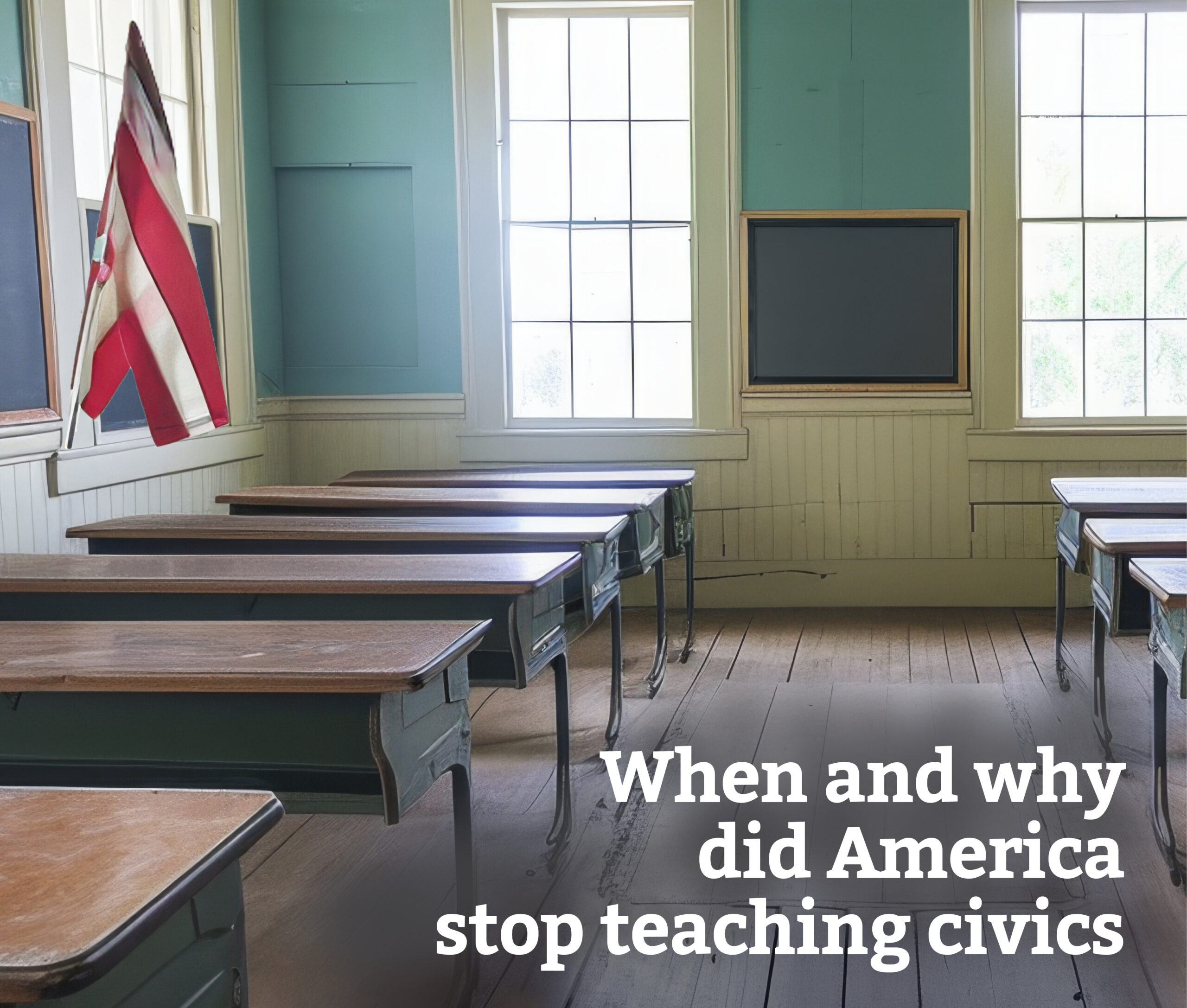
Our 2024 policy brief, When and Why Did America Stop Teaching Civics?, traced a troubling decades-long trend: the time devoted to civic education in American public schools began to decline significantly in the 1960s and has never fully recovered. Younger Americans today know less about civics than previous generations, and schools—often squeezed by competing priorities from standardized testing to STEM initiatives—have not consistently made civics a core part of the curriculum. The brief also found that civic education time shrinks further when the subject itself is perceived as controversial.
Our 2025 brief, Why Are Teachers Uncomfortable Teaching Civics?, went a step further by asking educators directly about their classroom experiences. The findings were candid and concerning: many civics teachers report feeling underprepared, unsupported, and — too often — genuinely afraid to teach the very subject they were hired to teach. More than 85% of surveyed teachers cited fear of controversy as a primary challenge, and nearly a third said they had received no guidance whatsoever from their school districts about what they are and are not permitted to teach.
These findings do not diminish our appreciation for teachers — they deepen it. To know that so many educators are showing up every day, navigating real uncertainty and real pressure, and still finding ways to bring American history and government to life in their classrooms? That is not just professional dedication. That is courage.
What Teachers Deserve
Teachers deserve our gratitude, of course. But they also deserve our support — concrete, sustained, and systemic. They deserve clear guidance from administrators and school boards, not vague or contradictory directives that leave them guessing about where the lines are drawn. They deserve professional development that prepares them to teach civics with confidence and nuance. They deserve a culture — in their schools, in their communities, and in our national conversation — that trusts them to handle complex material thoughtfully.
And perhaps most of all, they deserve to know that what they are doing matters. That the student who sat in the back of their third-period class, seemingly checked out, went home that night and told her parents about the separation of powers — and actually understood why it exists. That the young man who seemed more interested in his phone than the Federalist Papers grew up to vote in every election because a teacher once made him feel that his voice counted.
These outcomes are real. They happen every day. They just rarely make the news.
“We don’t need to reinvent the wheel of democracy. We just need to keep teaching people how to drive.” — Justice Sandra Day O’Connor
Our Commitment to the Teachers Who Teach Our American Story
The Sandra Day O’Connor Institute exists because Justice O’Connor believed that democracy is not self-sustaining — it must be actively taught, practiced, and renewed in every generation. Our programs, our research, and our resources are designed to help teachers do exactly that.
Through our Civics for Life initiative, we offer resources for educators who want to bring richer civics content into their classrooms. Our Constitution Series and public programming give teachers access to experts, context, and conversations that can enrich their own understanding of American government and history. And our ongoing research keeps a close eye on the landscape so we can discuss policies and practices that help teachers succeed.
We know the road is not always easy. But we also know that the teachers walking it are some of the most dedicated, passionate people in any profession. And we are honored to walk alongside them.
A Simple, Powerful Thank-You
This Teacher Appreciation Week, we invite you to take a moment — a real moment, not just a social media post — to thank a civics or social studies teacher in your life. Tell them specifically what they taught you. Or tell them that you never forgot how they made you feel when you walked into their classroom: like what you were learning was important, and like you, yourself, were important.
Because here is the truth that every good teacher knows, even when it is hard to remember on a tough day: the work of teaching history and civics is not just an academic exercise. It is an act of patriotism. It is an investment in the future of this country. And it is one of the most hopeful things a person can do.
To every teacher who has ever stood in front of a class and asked students to care about their country, their community, and each other:
Thank you. From the bottom of our hearts, thank you.

Sources & Related Reading