
In this issue of The Citizen, we celebrate the 45th Anniversary of Justice Sandra Day O'Connor's appointment as the first woman to the United States Supreme Court.
45 Years Ago Sandra Day O'Connor Changed History
Justice Sandra Day O'Connor became the 102nd Supreme Court Justice on Sept. 25, 1981
Forty-five years ago, on September 25, 1981, Sandra Day O'Connor took the oath of office as the 102nd justice of the United States Supreme Court, becoming the first woman in American history to serve on the nation's highest court. It was a moment 191 years in the making, and it would go on to reshape not only the Court, but the country's understanding of who belongs in its halls of power.
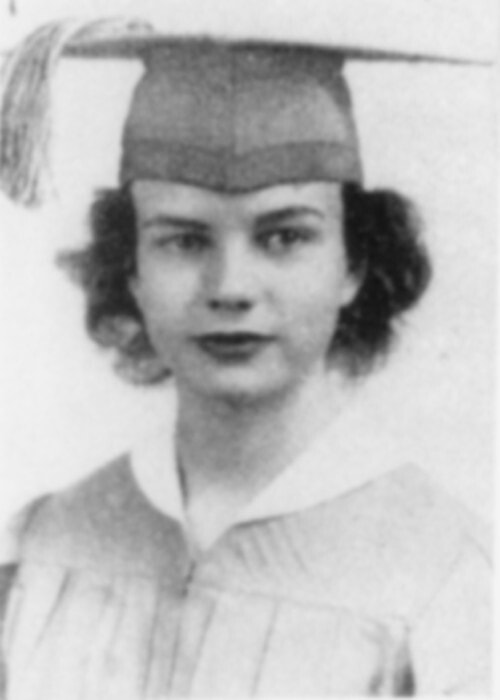
The Road to the Court
O'Connor was born in El Paso, Texas, on March 26, 1930, and spent much of her childhood on the Lazy B Ranch in southeastern Arizona, near Duncan, where she learned to ride, rope, and run a ranch alongside her family. She graduated third in a class of 102 from Stanford Law School in 1952, where she also studied alongside future Chief Justice William Rehnquist. Despite her academic record, most law firms of the era would not hire her as an attorney; one firm offered her a position as a legal secretary instead.
Undeterred, O'Connor accepted a position as a deputy county attorney in San Mateo, California — initially offering to work without salary or office space — before serving as a civilian attorney handling contracts for the U.S. Army in Germany. She then built a private law practice in Maricopa County, Arizona, while raising three sons. In 1965, she became an Arizona assistant attorney general. Appointed to the Arizona State Senate in 1969, she won election in 1970 and was reelected in 1972; that year, her colleagues chose her as majority leader, making her the first woman to serve as majority leader of a state senate. From there, she moved to the bench, serving as a Maricopa County Superior Court judge and later on the Arizona Court of Appeals.
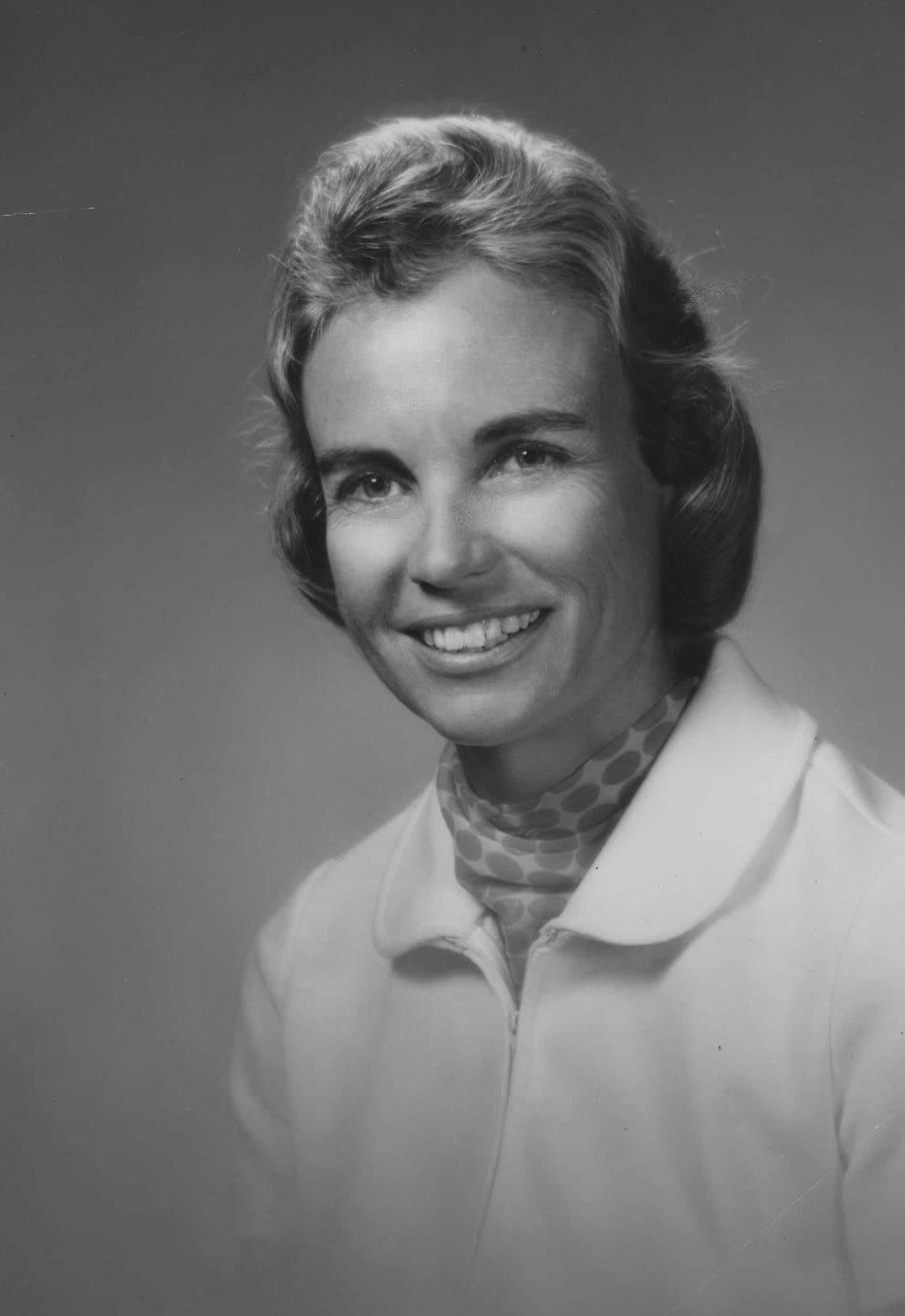
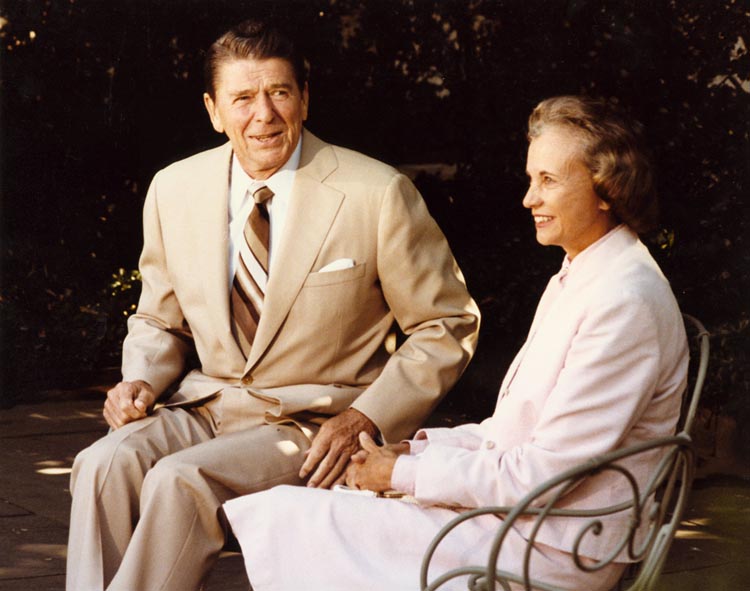
In 1981, fulfilling a campaign pledge to appoint the first woman to the Supreme Court, President Ronald Reagan nominated O'Connor to fill the seat of retiring Justice Potter Stewart. Her three-day confirmation hearing before the Senate Judiciary Committee that September was the first televised confirmation hearing for a Supreme Court nominee, bringing her judicial philosophy and the issue of abortion into national view. The Senate confirmed her by a 99–0 vote on September 21, 1981; Senator Max Baucus was absent. Four days later, she was sworn in — and a new chapter in American constitutional history began.
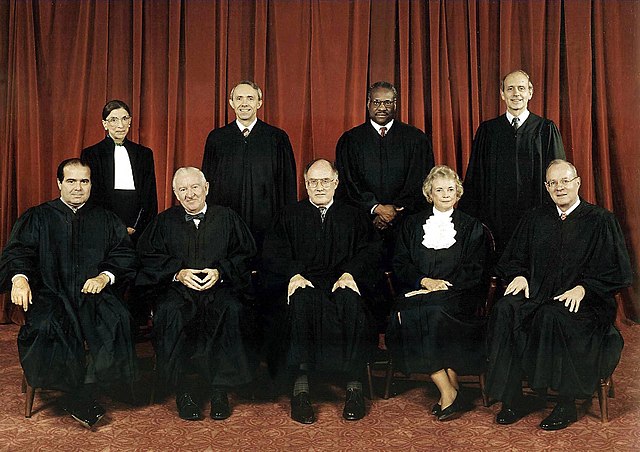
A Quarter-Century on the Court
Justice O'Connor served for nearly 24 years, from 1981 to her retirement, effective January 31, 2006. Often described as a pragmatic, case-by-case jurist rather than a strict ideologue, she came to be regarded as the Court's pivotal “swing vote” — the justice whose position frequently determined the outcome in the era's most closely watched cases.
Her influence spanned some of the most consequential areas of constitutional law. In New York v. United States (1992), she wrote for the Court that Congress may encourage states to carry out federal policy but may not simply compel them to administer a federal regulatory program — a major statement of the Constitution's federalism limits. In Grutter v. Bollinger (2003), she wrote the majority opinion upholding the narrowly tailored consideration of race in university admissions to obtain the educational benefits of diversity, while expressing the expectation that, 25 years from 2003, such preferences would no longer be necessary. She helped shape Establishment Clause doctrine through her “endorsement test.” In Hamdi v. Rumsfeld (2004), she wrote a plurality opinion concluding that a U.S. citizen held as an enemy combatant must receive a meaningful opportunity to challenge the factual basis for detention before a neutral decision-maker. In Mississippi University for Women v. Hogan (1982), one of her first major opinions, she wrote for the Court in striking down a state nursing school's exclusion of qualified male applicants, applying the requirement that sex-based classifications meet an exceedingly persuasive justification.
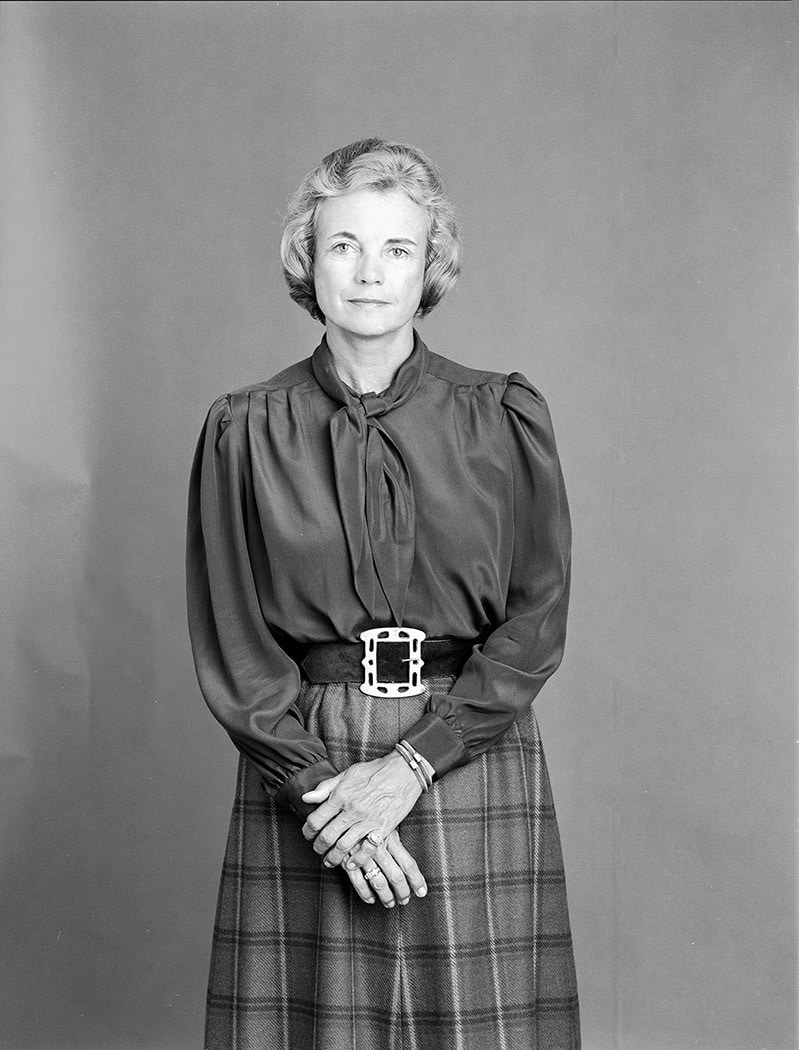
Across these and hundreds of other cases, O'Connor's opinions were marked by careful attention to real-world consequences and a reluctance to issue sweeping rules where narrower ones would do, an approach that drew both admiration for its practicality and critique for its unpredictability, but that profoundly shaped constitutional law for a generation.

A Legacy That Has Outlasted Her Tenure
Justice O'Connor did not step back from public life after retiring. She redirected it. In 2009, she founded our organization, now known as the Sandra Day O'Connor Institute. Over the years, the O'Connor Institute has reached more than 300 million audience members and program participants across its platforms, including the Civics for Life Community App.
Justice Sandra Day O'Connor passed away on December 1, 2023, at age 93, leaving a lasting imprint on American law and civic life
One Trailblazing Justice, Nearly 100 Clerks
During her nearly 25 Terms on the Supreme Court, Justice Sandra Day O'Connor employed about four law clerks per Term, nearly 100 young lawyers who assisted her with legal research, case analysis, and opinion drafting. Many of her former clerks went on to become judges, professors, government lawyers, and leaders in public service and private practice. The O'Connor Digital Library's Law Clerk Archive preserves the official record of those clerks and their later careers.
Justice O'Connor took her role as a mentor seriously. She stayed in close touch with her former clerks long after their year in chambers ended, hosting reunions and following their careers with real interest and pride. They form a living extension of her legacy. One the Institute is proud to preserve and celebrate.
Among the distinguished individuals who served as her law clerks:
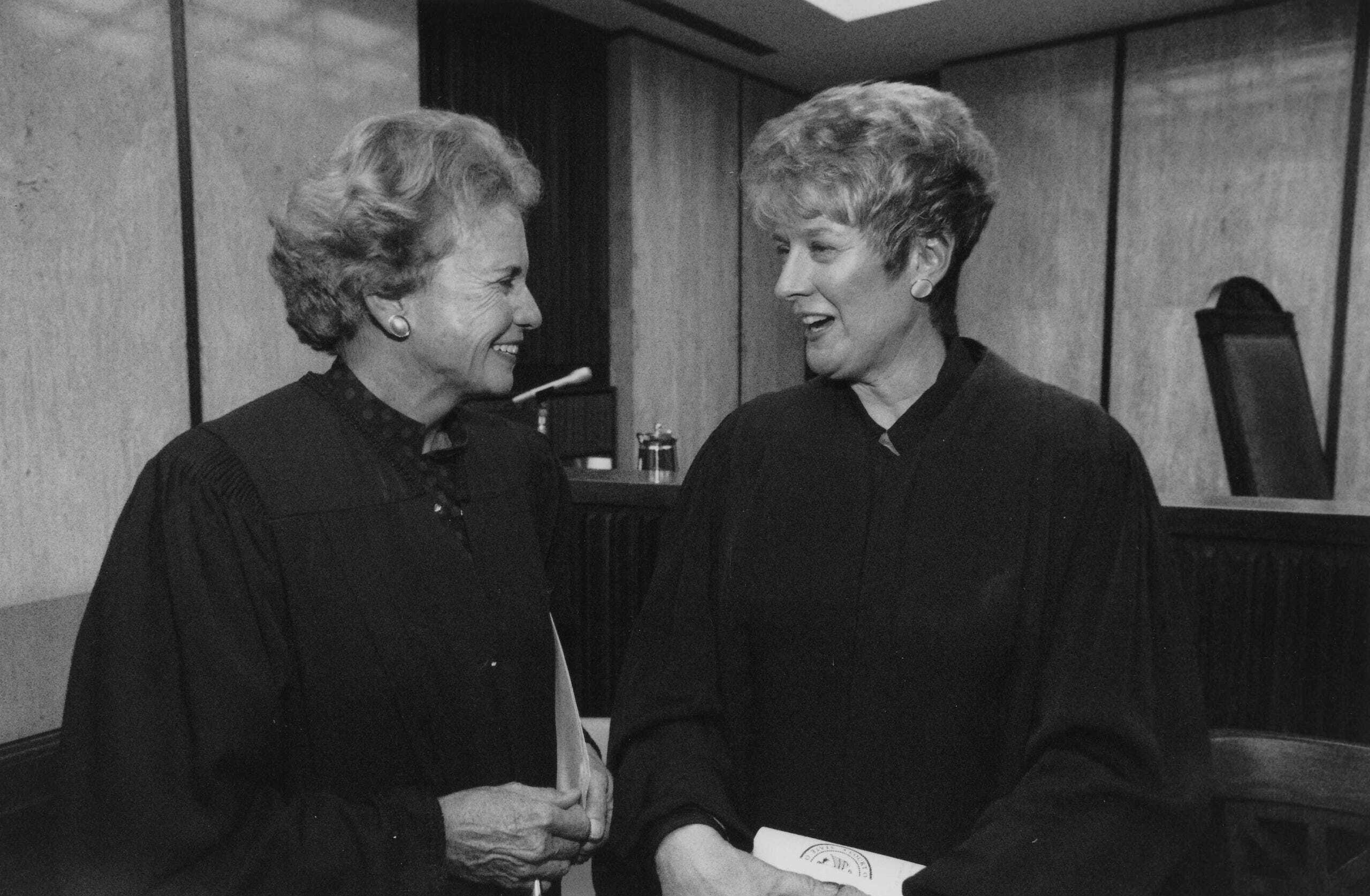
Justice Sandra Day O'Connor (left) with Ruth V. McGregor, her law clerk in the 1981 Term and later Chief Justice of the Arizona Supreme Court.
- Ruth V. McGregor (1981 Term) later served as Chief Justice of the Arizona Supreme Court from 2005 to 2009, retracing the path O'Connor took between the Arizona bench and Washington.
- Barbara Bennett Woodhouse (1984 Term) became the L.Q.C. Lamar Professor of Law and director of the Child Rights Project at Emory University School of Law.
- Ivan K. Fong (1989 Term) served as General Counsel of the U.S. Department of Homeland Security and later led the legal departments of 3M and Medtronic.
- Crystal Nix-Hines (1991 Term) served as U.S. Ambassador to UNESCO from 2014 to 2017, after careers in journalism, television, and international law.
- Katherine L. Adams (1993 Term) has served as Senior Vice President and General Counsel of Apple Inc. since 2017.
- Viet D. Dinh (1994 Term) served as U.S. Assistant Attorney General and a Georgetown law professor, and founded Bancroft PLLC.
These are just a handful of the stories among the nearly 100 men and women who clerked for Justice O'Connor. Others have gone on to serve as federal judges, law school deans and professors, government attorneys, and leaders in private practice, each carrying forward, in their own way, the standard of thoroughness and independence Justice O'Connor set.
Explore the Full Archive
The O'Connor Digital Library maintains a fuller record of Justice O'Connor's clerks across her nearly quarter-century on the Court. Readers interested in learning more about these extraordinary individuals, and the mentor who shaped so many legal careers, can explore the complete archive online.
Civics Must Be Learned By Every Generation
A guiding conviction behind the O'Connor Institute is that every generation must learn American government and history anew. As Justice O'Connor herself put it, “We have a complex system of government. You have to teach it to every generation.” That conviction sits at the heart of every civics program the Institute runs today, for learners young and old.
Reaching Students Where They Are
For high schoolers, the O'Connor Institute Ambassadors Civics & Debate Club offers a free, fully online program for students in grades 9 through 12, meeting monthly from September through May. No debate experience is required, just curiosity and a willingness to engage. Students from across the country come together to discuss civics topics as they relate to current events, building both civic knowledge and confidence in civil discourse along the way. Participants can also apply for scholarship opportunities, including the $5,000 John Jay Fetzer Memorial Scholarship for graduating seniors, and can earn a graduation cord recognizing their commitment to the program.

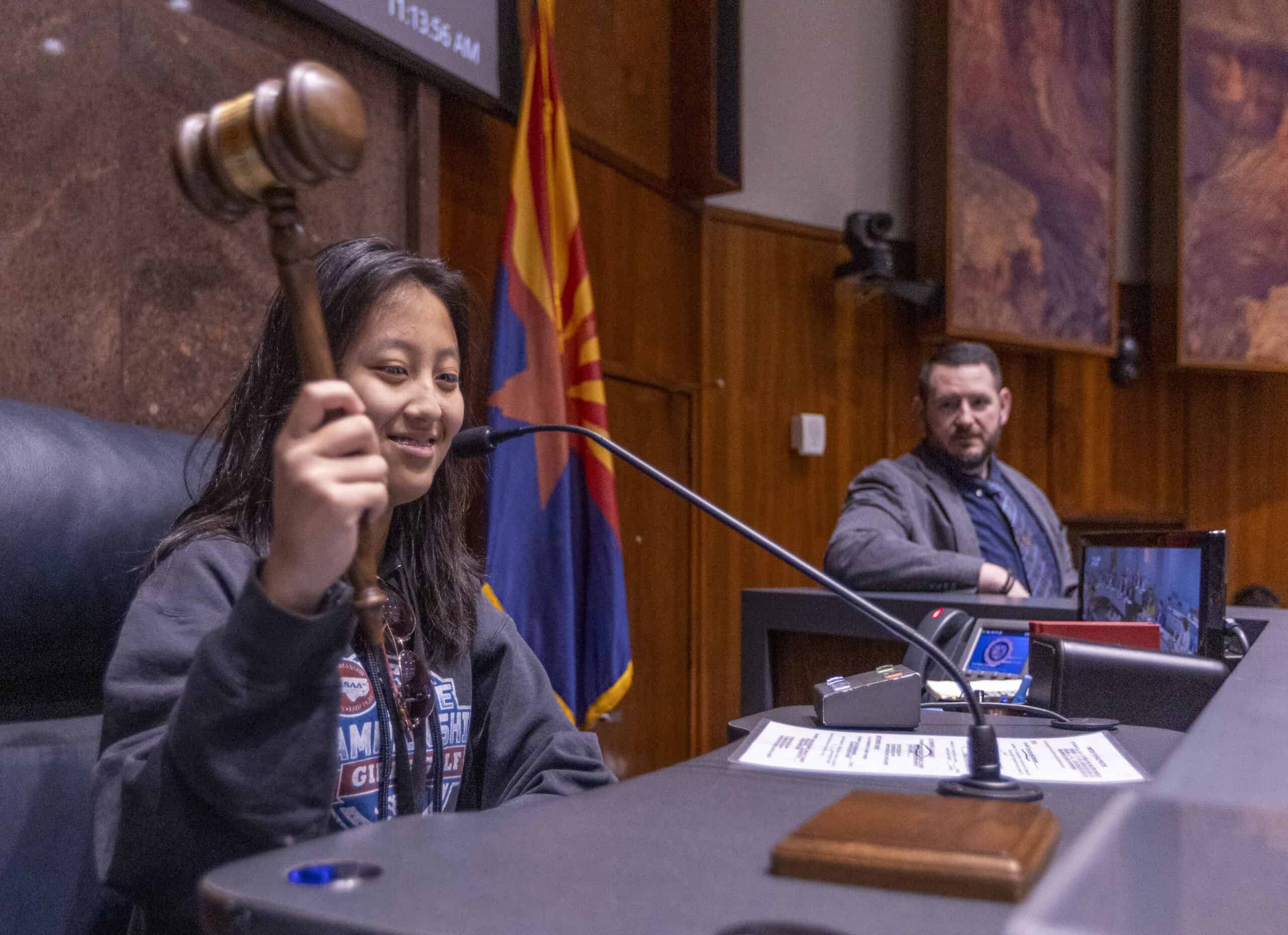
For middle schoolers, Camp O'Connor USA brings civics education to life through a free, merit-based summer program held at Arizona State University's Sandra Day O'Connor College of Law for current 7th- and 8th-grade students. Through hands-on activities, interactive exercises, and collaborative discussion, campers explore the structure of American government, civic responsibility, and leadership over the course of a week, building skills that go well beyond the classroom.
Each year, the Civics Challenge invites students in grades 6 through 12 to submit an essay or video on a civics topic of their choosing and compete for cash awards. It's a chance for students to engage creatively with the material they're learning, and for the Institute to recognize and reward civic curiosity wherever it's found.

A Platform Built to Last
Underpinning all of these programs is Civics for Life, the Institute's digital home for civics education. Civics for Life is built not just for students and teachers, but for lifelong learners of every generation: free, nonpartisan, long-form educational content for anyone looking to deepen their understanding of how American democracy actually works. Just one year ago, Civics for Life expanded into the Civics for Life Community App. Today, more than 11,000 members enjoy daily quizzes, On This Day history tidbits, a book club, civil conversations, and more. It is the digital extension of the same mission that has always animated the Institute's work, meeting citizens where they already are, at every stage of life, whether that's a classroom, a summer camp, or a living room.
Growing Every Day
Together, these programs represent a continuously growing reach: new Ambassadors joining a nationwide debate community, new campers spending a week learning what it means to be an engaged citizen, and newly engaged citizens of every age discovering Civics for Life for the first time. Justice O'Connor spent the second half of her public life building exactly this kind of infrastructure. She saw it as an investment that pays dividends only years and decades later — in more informed voters, more thoughtful public debate, and more Americans willing to participate in their own self-government.
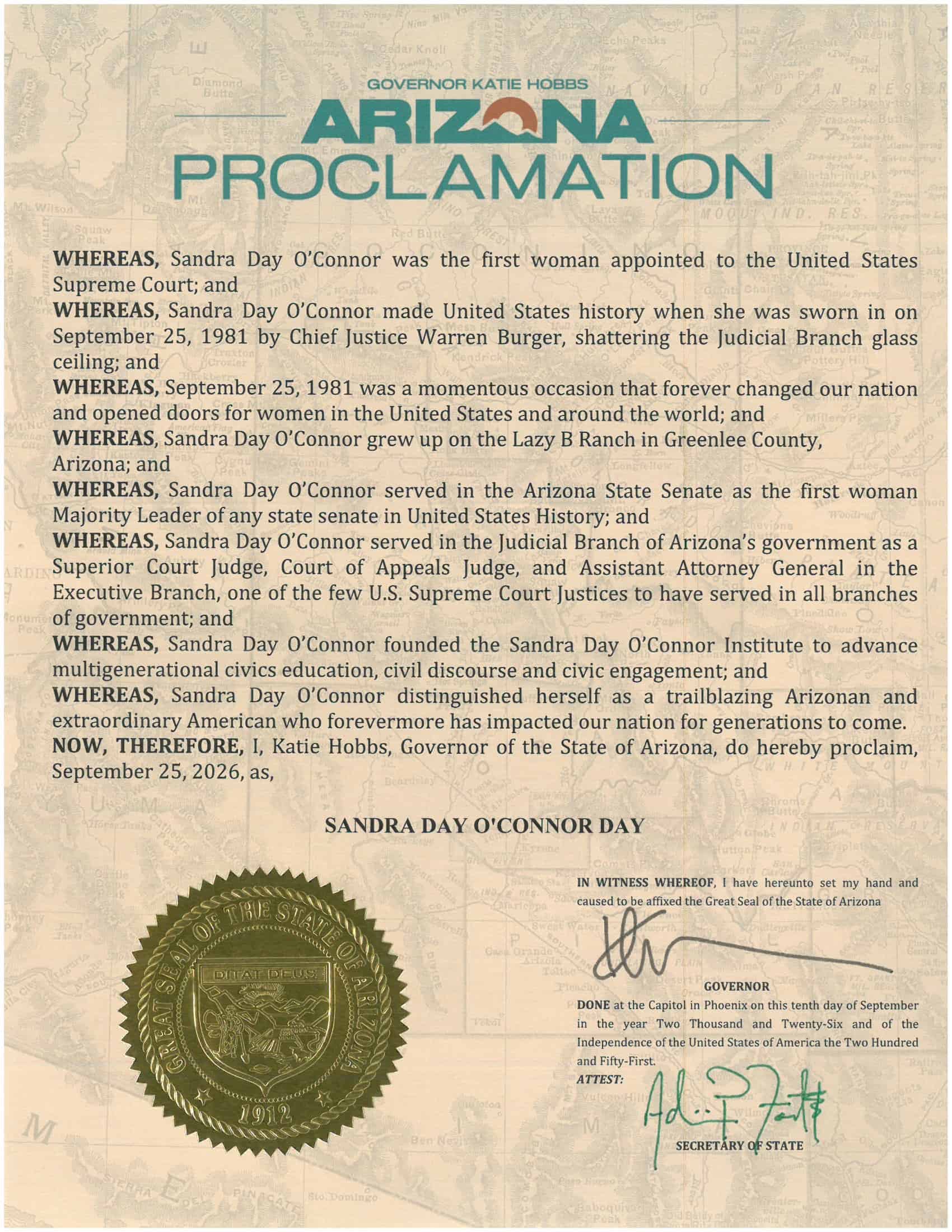
Arizona is marking this milestone officially as well. Governor Katie Hobbs has proclaimed September 25, 2026, Sandra Day O'Connor Day across the state, citing her historic 1981 swearing-in, her Lazy B Ranch upbringing in Greenlee County, her service as the first woman to lead a state senate as majority leader, and her standing as one of the few U.S. Supreme Court justices to have served in all three branches of government. The proclamation also recognizes her founding of the Sandra Day O'Connor Institute to advance multigenerational civics education, civil discourse, and civic engagement, the very mission this special edition celebrates.
Additionally, the Arizona Department of Education is sponsoring live programs on Sandra Day O’Connor Day. The O'Connor Institute has made special presentations on the Justice for Arizona classrooms. Teachers and students will explore Sandra Day O’Connor‘s journey from growing up on the Lazy B Ranch to becoming the first woman appointed to the US Supreme Court in this live webinar program.
Forty-five years after she was sworn in as the first woman on the Supreme Court, Justice O'Connor's most enduring legacy may not be found in a single opinion at all. It may be found in a teenager on a Zoom call debating the meaning of the First Amendment, a middle schooler at summer camp learning how a bill becomes a law, or a citizen anywhere in the country turning to Civics for Life to learn something new about how our country works. Government, as she reminded us, must be taught to every generation, and thanks to the programs that carry her name, it still is.

Download Our App

History Podcast Series

Read Latest Research
Reading this on the web? Be the first to know about program and event news via email. Register for The Citizen and receive news straight to your inbox.